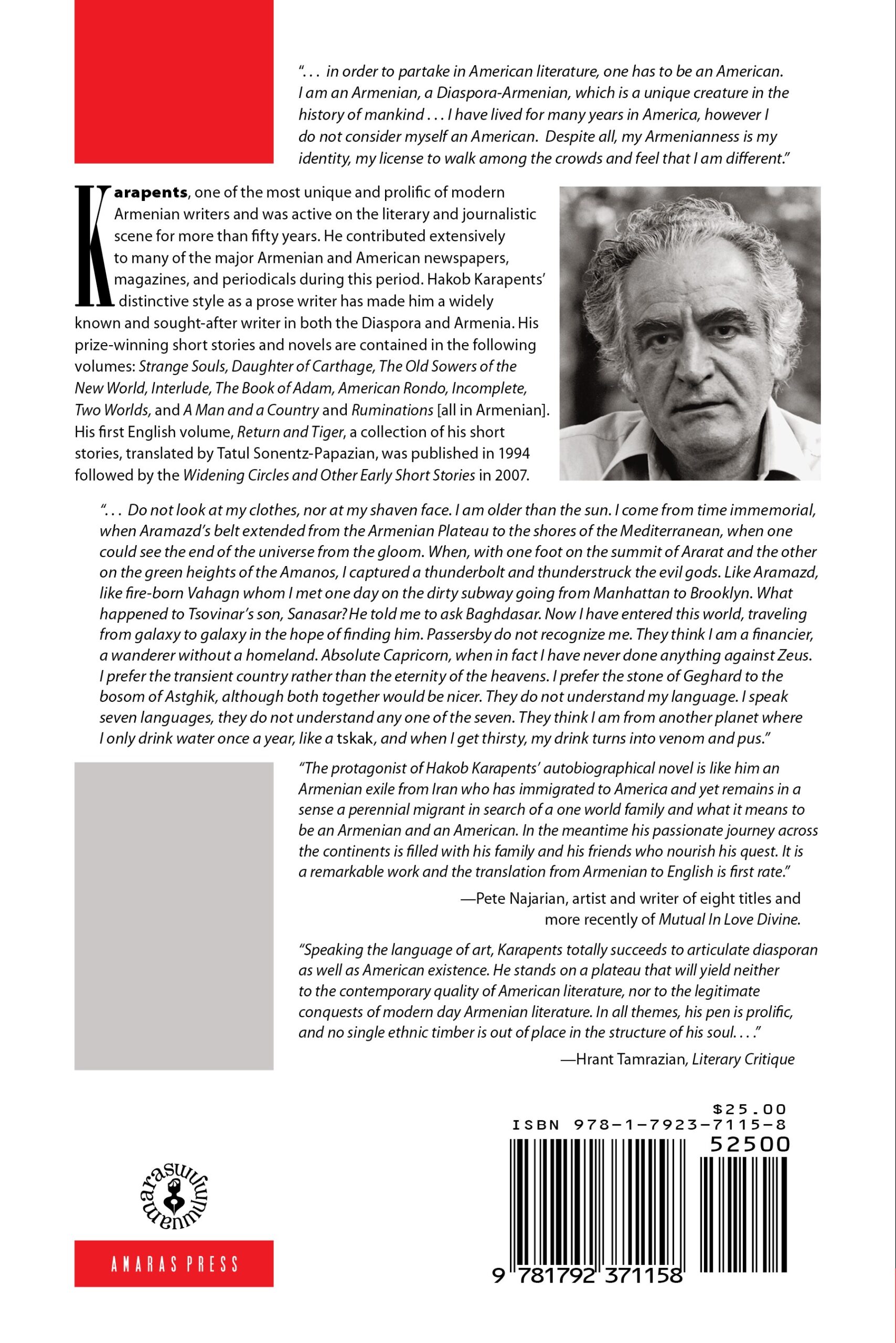
“The protagonist of Hakob Karapents’ autobiographical novel is like him an Armenian exile from Iran who has immigrated to America and yet remains in a sense a perennial migrant in search of a one world family and what it means to be an Armenian and an American. In the meantime his passionate journey across the continents is filled with his family and his friends who nourish his quest. It is a remarkable work and the translation from Armenian to English is first rate.”
Pete Najarian, artist and writer of eight titles and more recently of Mutual In Love Divine.
Considered by critiques as the crowning achievement of Hakob Karapents, this work is dedicated to the ninety-fifth birth anniversary of the writer.
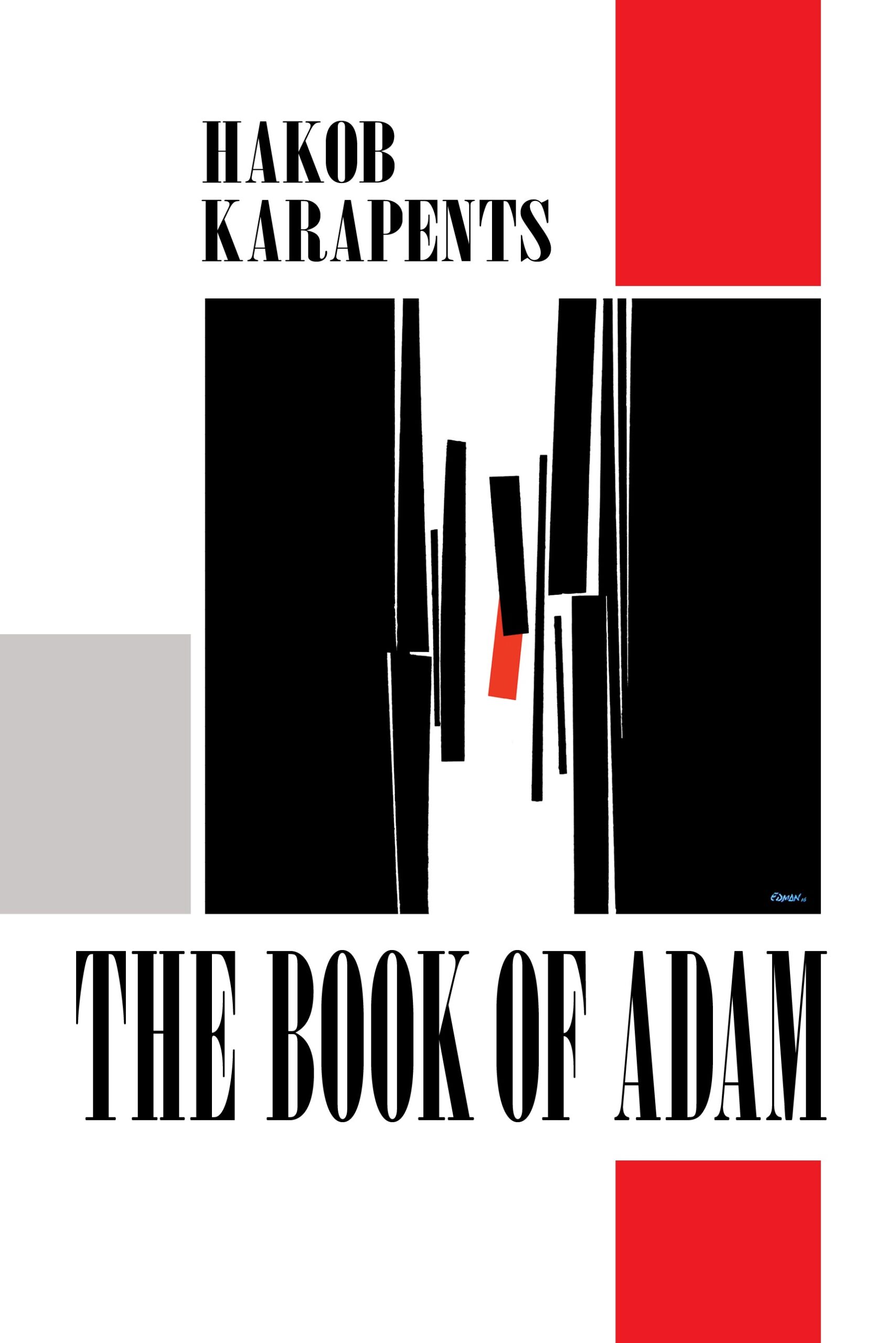
Watertown, MA – The Amaras Art Alliance announces the release in English of the popular and celebrated novel, The Book of Adam (Adami girke) by the prolific Diaspora Armenian writer Hakob Karapents. The inaugural publication of the Amaras Press, a new venture of the Art Alliance, was launched on the organization’s 30th anniversary (2020).
This is the second translation of The Book of Adam. The first translation in Farsi titled, Ketabeh Adam by Andranik Khechoumian, celebrated Iranian Armenian writer, playwright and translator, dedicated to the 95th anniversary of the birth of Hakob Karapents, was released in October 2020.
This English edition of the novel also dedicated to the late inventor, industrialist, humanitarian, philanthropist, and an old friend and patron of Karapents, Sarkis Acopian, and was translated from its original Armenian by Dr. Ara Ghazarians, curator of the Armenian Cultural Foundation of Arlington, MA. In paperback, the book includes an introduction, notes, a glossary and a bibliography of works by the author.
The Book of Adam is Karapents’ second novel, written in 1980 and completed in less than a year and almost a decade after his first novel, the Daughter of Carthage (1972). It has received rave reviews by several Diaspora Armenian writers and literary critiques. It is the winner of the Armenian General Benevolent Union’s (AGBU) Alex Manoogian Literary Award and French-Armenian Writers Society’s Eliz Kavookjian-Ayvazian Literary Award. The second edition of the novel was released in Armenia in 2012. The novel has also been twice adapted for the stage, once in Tehran (2005) in honor of Karapents’ 80th birth anniversary under the direction of Seto Gojamanian titled “Where are we to be buried” and then in Los Angeles (2017) by Armen Sarvar titled “Yes, Adam Nourian.”
 The Book of Adam is constructed on three levels: the state of the American social order in the final decades (1980s) of the twentieth century; the current crisis of the Diaspora Armenian; and the crisis of man finding himself at the end of the twentieth century. The characters and plot serve as the means of linking this triad of knots together and reaching a certain truth. “Aside from flashback,” as observed by the late editor, writer and translator Aris Sevag, “the book is written to understand life by the return trip and to live life by the road ahead, the metaphysical with the real, sometimes relying on non-existent realities which are more powerful than the real; therefore, from tie to tie, there surfaces a dry journalistic style to produce a clash between tangible and intangible realities. From this standpoint, the Book of Adam enters the self-contained current of contemporary American literature, which is a sad and nondescript visit to solitary persons and solitary communities.”
Copies of the book are also available for purchase from the Armenian Prelacy Bookstore, New York and Abril Bookstore in Los Angeles.
Compiled and Edited by Ara Ghazarians | Published 2018
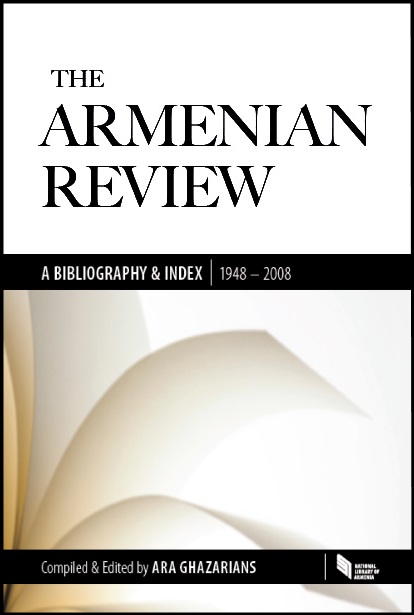
The Armenian Review, an internationally recognized, multidisciplinary English language academic journal, is the longest continually published English-language Armenian publication of its kind. Established in Boston in 1948, its mandate has been to “acquaint the English-speaking public with the history and cultural achievements of the Armenian people.“ It has promoted scholarly research covering all periods and aspects the Armenian history and culture, the Armenian Diaspora with a renewed focus on Soviet Armenia and post Soviet Armenia, and the history and culture of peoples neighboring Armenia.
The Armenian Review: A Bibliography & Index (1948-2008) is the most comprehensive index of the journal to date. Comprised of over three thousand entries in three main parts, the Bibliography covers fifty volumes and two hundred issues. The first and largest part, Articles, is comprised of twenty-four subject categories, including anthropology, sociology, ethnography, philosophy, the arts, Armenian church, language and linguistics, literature, history from antiquity to the present, diasporan communities and institutions, political parties, education, Soviet Union (its republics, ideology, nationalities policy, law, political and civil liberties). A second section, Book Reviews, provides a wealth of information on about five hundred titles related to Armenia, the Armenian experience and people, and relevant topics. Lastly, Illustrations provides a detailed index of all the images, sketches, maps, drawings, portraits and photographs that have accompanied the issues of the Armenian Review throughout the years. The Bibliography concludes with an alphabetically listed detailed index of names and subjects.